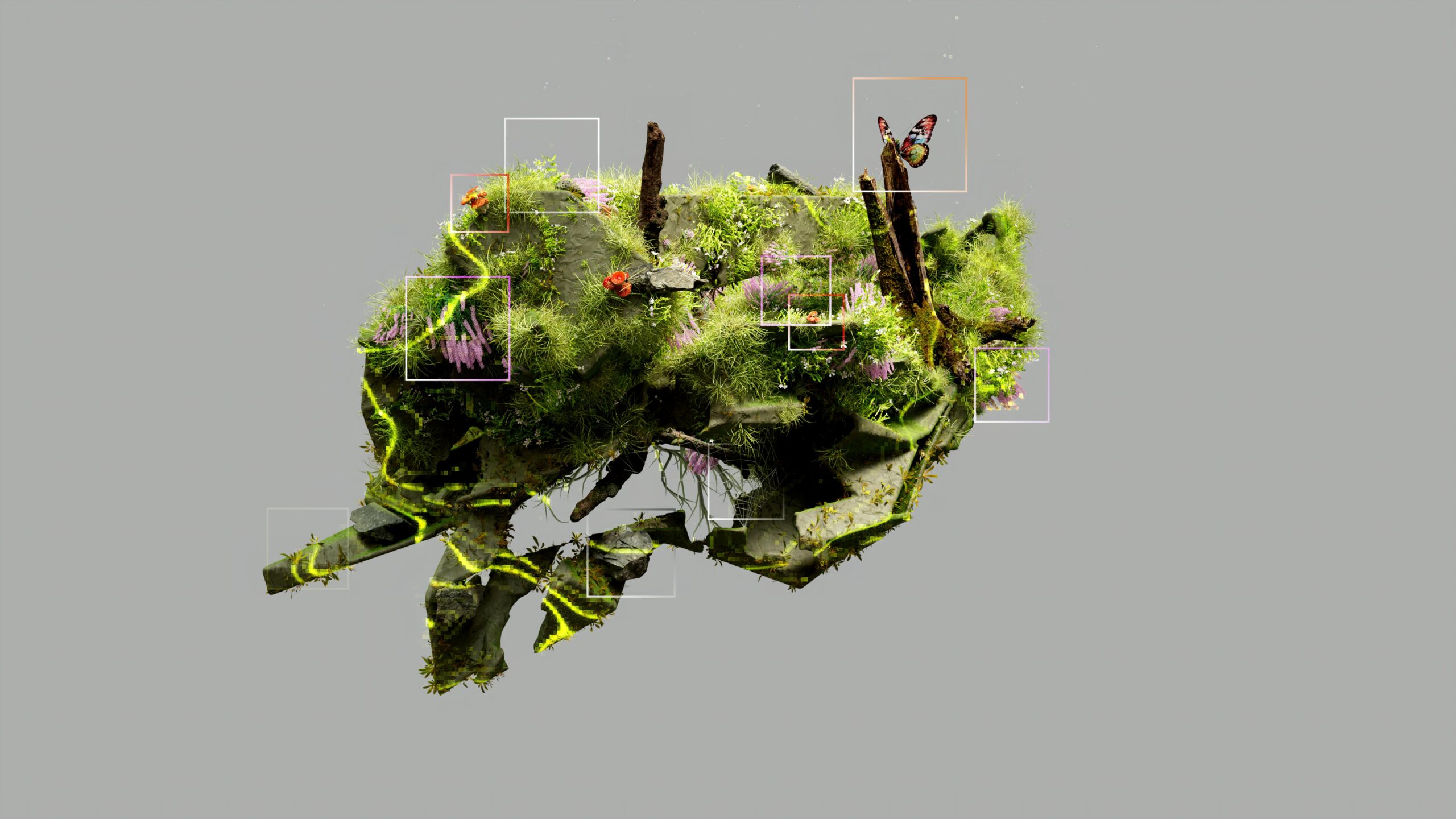
Our minds operate within invisible boundaries that shape how we perceive reality, limiting possibilities before we even recognize them. These perceptual boundaries can either confine us or become gateways to extraordinary growth.

🧠 Understanding the Architecture of Perceptual Boundaries
Perceptual boundaries are the mental frameworks that define what we believe is possible, acceptable, or achievable. They’re formed through a complex interplay of cultural conditioning, past experiences, educational systems, and neurological patterns that have been reinforced over years or even decades.
These boundaries operate largely below our conscious awareness, functioning as automatic filters that process information and determine our responses to the world around us. When we encounter something that challenges these boundaries, our brain often triggers a defensive response, creating resistance to new perspectives or possibilities.
The neuroscience behind perceptual boundaries reveals that our brains are pattern-recognition machines designed for efficiency. While this evolutionary trait helped our ancestors survive, it can become a liability in modern contexts where innovation, creativity, and adaptability are essential for success and fulfillment.
🔍 Identifying Your Personal Perceptual Limitations
Before you can shift your perceptual boundaries, you must first become aware of where they exist. This process requires honest self-examination and a willingness to confront uncomfortable truths about how you’ve been operating in the world.
Start by paying attention to your automatic responses. When do you find yourself saying “that’s impossible” or “that’s just how things are”? These statements often signal the presence of a perceptual boundary. Similarly, notice situations where you feel strong emotional resistance without a clear rational basis.
Common Signs of Rigid Perceptual Boundaries
- Consistently avoiding unfamiliar situations or experiences
- Dismissing ideas that contradict your worldview without genuine consideration
- Feeling threatened by people who think differently than you
- Repeating the same patterns while expecting different results
- Experiencing a sense of being “stuck” in various life areas
- Difficulty imagining alternative ways of living or working
These indicators don’t mean there’s something wrong with you. They simply reveal where your perceptual system has created protective barriers that may have once served you but now limit your potential for growth and transformation.
⚡ The Science of Perceptual Flexibility
Neuroplasticity research has revolutionized our understanding of the brain’s capacity for change. Contrary to older beliefs that the brain becomes fixed in adulthood, we now know that neural pathways can be rewired throughout our entire lives. This biological reality means perceptual boundaries are not permanent structures but malleable patterns.
When you deliberately expose yourself to new perspectives and experiences, your brain creates new neural connections. With repeated exposure, these connections strengthen, gradually shifting the boundaries of what you perceive as possible or normal. This process doesn’t happen overnight, but it is remarkably reliable when approached with consistency and intention.
The key neurochemical players in this process include dopamine, which rewards novelty and learning, and cortisol, which can either facilitate adaptive stress responses or reinforce rigid boundaries when chronically elevated. Understanding this biochemistry helps explain why some boundary-shifting practices work better than others.
🚀 Strategic Practices for Expanding Your Perceptual Framework
Shifting perceptual boundaries requires more than intellectual understanding. It demands embodied practices that create new experiential reference points for your nervous system and cognitive structures.
The Power of Deliberate Discomfort
Growth happens at the edge of your comfort zone, where familiar patterns meet unfamiliar territory. By deliberately seeking experiences that challenge your current perceptions, you create opportunities for boundary expansion. This doesn’t mean reckless risk-taking, but rather calculated exposure to novelty.
Start small with low-stakes experiments. If you always take the same route to work, change it. If you never eat alone at restaurants, try it once. If you’ve never spoken to strangers at events, set a goal to have three genuine conversations. Each small act of boundary-crossing builds your capacity for larger shifts.
Perspective-Taking Through Multiple Lenses
One of the most powerful tools for perceptual boundary shifts is the intentional practice of viewing situations through radically different perspectives. This goes beyond simple empathy to actively inhabiting alternative worldviews, even temporarily.
When facing a challenge or decision, systematically consider how different people might perceive the situation. How would a scientist approach this? An artist? A child? Someone from a completely different culture? This practice literally expands the perceptual territory available to you.
Meditation and Mindfulness as Boundary-Dissolving Tools
Contemplative practices offer unique access to perceptual boundaries because they train you to observe your own mental processes. Through meditation, you can witness how your mind constructs boundaries in real-time, creating space between automatic reactions and conscious responses.
Regular mindfulness practice develops what psychologists call “metacognition”—the ability to think about your thinking. This capacity is essential for perceptual boundary work because it allows you to recognize when you’re operating within limiting frameworks and choose alternative perspectives.
💡 Breaking Through Professional and Creative Limitations
Perceptual boundaries have profound implications for professional success and creative output. Many people remain stuck in unsatisfying careers or unable to realize their creative potential not because they lack ability, but because their perceptual boundaries define narrow possibilities.
In the professional realm, these boundaries often manifest as beliefs about what’s realistic, what you’re qualified for, or what success should look like. An employee might never consider entrepreneurship because their perceptual boundary doesn’t include that possibility. A mid-level manager might not pursue executive roles because they don’t perceive themselves as “leadership material.”
Creative blocks frequently stem from perceptual boundaries around what constitutes “good” work or what others will accept. Artists, writers, and innovators often struggle not with lack of ideas but with rigid boundaries about which ideas are worth pursuing or how work should be executed.
Applying Boundary Shifts to Career Development
To expand your professional perceptual boundaries, actively study people whose career paths seem impossible or unrealistic from your current perspective. Don’t just admire them—research the specific steps they took, the decisions they made, and the mindset shifts that enabled their trajectory.
Create what psychologists call “possible selves”—detailed, embodied visions of alternative professional identities you might inhabit. Spend time visualizing yourself in these roles with sensory richness. This practice begins rewiring your perceptual boundaries around professional identity.
🌍 Cultural and Social Dimensions of Perceptual Boundaries
While we often think of perceptual boundaries as individual, they’re deeply shaped by collective forces. Your culture, social class, education, and community all contribute invisible assumptions about how the world works and what’s available to you.
These collective boundaries can be both supportive and limiting. They provide shared meaning and social cohesion, but they can also perpetuate harmful limitations, particularly for marginalized groups who face additional perceptual constraints imposed by systemic inequities.
Expanding your perceptual boundaries in social contexts requires awareness of these collective dimensions. It means questioning not just your personal assumptions but the cultural water you swim in. This level of inquiry can be uncomfortable because it often reveals how much of what we consider “reality” is actually socially constructed.
Building Cross-Cultural Perceptual Flexibility
One of the most effective ways to shift cultural perceptual boundaries is through genuine immersion in different cultural contexts. This doesn’t require international travel—many communities contain rich cultural diversity if you’re willing to engage authentically.
The key is moving beyond tourist-level exposure to meaningful relationship-building with people whose worldviews differ from yours. These relationships create experiential knowledge that intellectual understanding alone cannot provide, fundamentally expanding your perceptual range.
🔄 Navigating the Discomfort of Boundary Dissolution
Expanding perceptual boundaries is rarely a smooth, comfortable process. When long-held boundaries begin to shift, you may experience disorientation, anxiety, or even grief for the simpler certainties you’re leaving behind.
This discomfort is not a sign that something’s wrong—it’s evidence that genuine change is occurring. Your nervous system and identity structures are reorganizing around a broader perception of reality, and this reorganization naturally feels unstable.
The challenge is to remain with this discomfort without either pushing through recklessly or retreating to familiar boundaries. This requires developing what therapists call “distress tolerance”—the capacity to experience uncomfortable emotions and sensations without immediately acting to eliminate them.
Creating Support Systems for Boundary Work
Perceptual boundary shifts are significantly easier when you have supportive relationships and structures. Seek out communities, mentors, or peers who are also engaged in expanding their perceptual frameworks. These relationships provide validation, guidance, and accountability when the process becomes challenging.
Consider working with a coach, therapist, or guide who specializes in transformational change. Professional support can help you navigate the psychological complexity of boundary dissolution while maintaining stability in your daily life.
📊 Measuring Progress in Perceptual Expansion
Unlike many personal development goals, perceptual boundary shifts can be difficult to measure through conventional metrics. The changes are often subtle, cumulative, and recognized more clearly in retrospect than in the moment.
| Indicator | Before Boundary Shift | After Boundary Shift |
|---|---|---|
| Response to novelty | Automatic resistance or dismissal | Curiosity and exploratory interest |
| Decision-making process | Limited options considered | Multiple perspectives evaluated |
| Emotional range | Narrow or suppressed | Fuller spectrum accessed |
| Problem-solving approach | Repetitive patterns | Creative alternatives generated |
| Interpersonal relationships | Conflict around differences | Appreciation of diverse viewpoints |
Pay attention to these qualitative shifts in how you experience and navigate life. Notice when you surprise yourself by considering an option you would have automatically dismissed before, or when you feel genuinely interested in a perspective you once found threatening.
🎯 Integrating Expanded Perceptions Into Daily Life
The ultimate goal of perceptual boundary work isn’t just to have interesting insights or philosophical realizations. It’s to embody expanded perceptions in how you actually live, decide, create, and relate to others.
Integration requires translating new perceptual capacities into concrete behaviors and choices. This might mean pursuing opportunities you previously considered impossible, ending relationships that only make sense within old boundaries, or starting projects that your expanded perception now reveals as viable.
Start with small, reversible changes that reflect your shifting boundaries. These low-risk experiments allow you to test new perceptions without overwhelming your system. As you gain confidence and evidence that your expanded perceptions lead to positive outcomes, you can make larger, more consequential shifts.
🌟 Sustaining Perceptual Flexibility Over Time
Perhaps the greatest challenge in perceptual boundary work is maintaining flexibility over time. Our brains naturally tend toward efficiency and pattern solidification, which means new boundaries can become as rigid as old ones if we’re not intentional.
The solution is cultivating perceptual flexibility as an ongoing practice rather than a one-time achievement. This means regularly exposing yourself to novelty, questioning assumptions that feel settled, and maintaining relationships with people who challenge your worldview.
Build reflection practices into your routine—weekly reviews where you examine where you might be developing new rigidities, or monthly explorations of a topic completely outside your normal interests. These practices keep your perceptual system dynamic and adaptive.

🔮 The Ripple Effects of Expanded Perception
When you successfully shift your perceptual boundaries, the effects extend far beyond your individual experience. Expanded perception changes how you show up in relationships, what you contribute professionally, and how you participate in your communities.
People with flexible perceptual boundaries tend to be more innovative, compassionate, and resilient. They can hold complexity without collapsing into simplistic thinking. They bridge differences rather than deepening divisions. They see possibilities where others see only constraints.
These qualities become increasingly valuable in our complex, rapidly changing world. As artificial intelligence, climate change, and social transformation reshape our collective reality, the ability to expand perceptual boundaries becomes not just a personal development tool but a survival skill for navigating uncertainty.
Your journey of perceptual boundary expansion is ultimately about claiming your full human capacity to perceive, understand, and create. The limitations you’ve accepted as fixed features of reality are often just the edges of what you’ve explored so far. Beyond those edges lies territory rich with possibility, waiting for you to recognize it, claim it, and bring it into being through your expanded vision. The power to shift your perceptual boundaries has been within you all along—now you have the framework to unlock it.