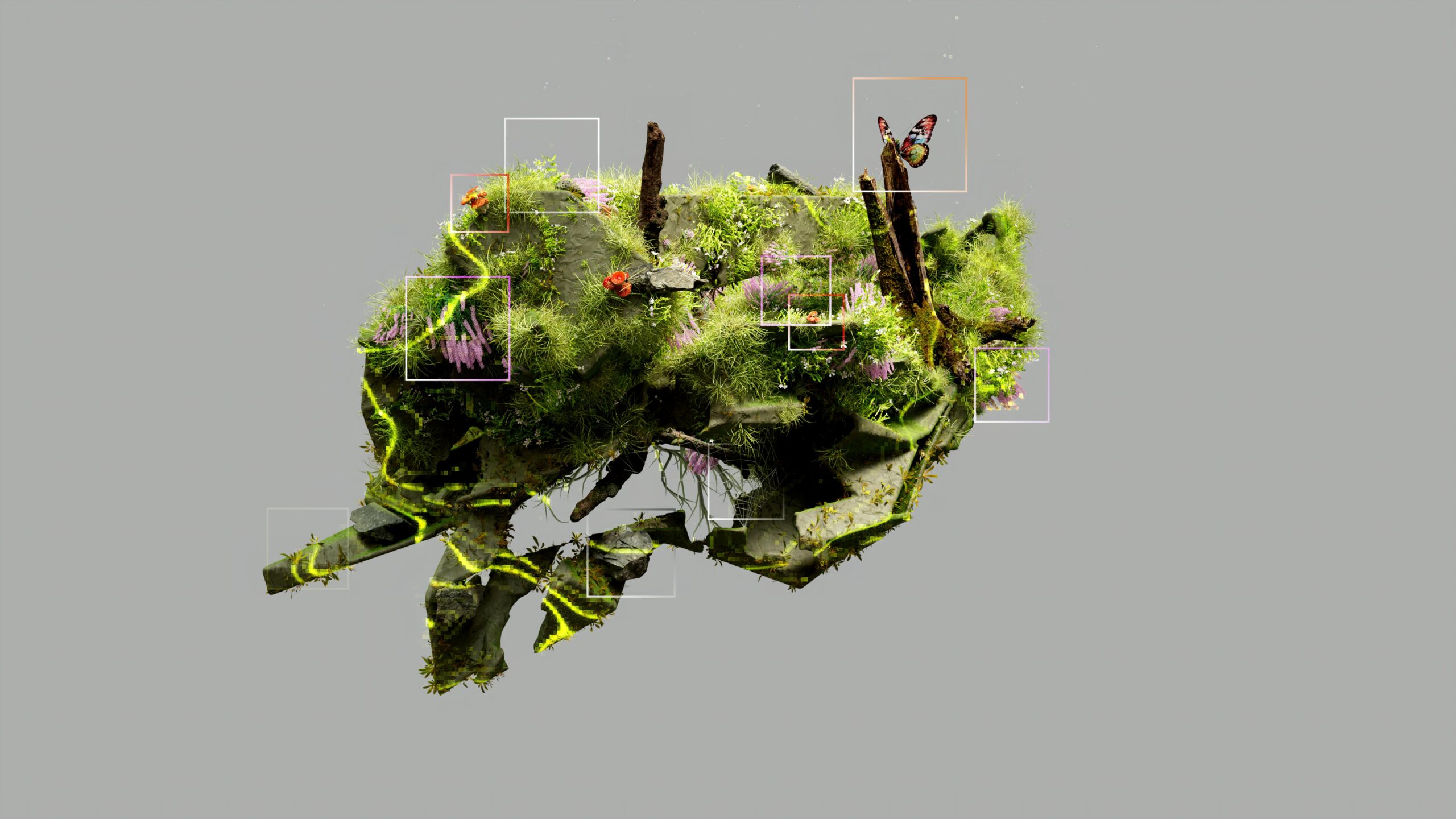
Phenomenological cognition represents a fascinating intersection where consciousness meets experience, offering profound insights into how we perceive, understand, and navigate our world through direct, lived experience.

🧠 The Foundation: What is Phenomenological Cognition?
Phenomenological cognition emerges from the philosophical tradition of phenomenology, pioneered by Edmund Husserl in the early 20th century. This approach to understanding consciousness emphasizes the first-person perspective—how things appear to us in our immediate, lived experience rather than how they exist objectively in the world. Unlike traditional cognitive science that often reduces mental processes to computational mechanisms, phenomenological cognition honors the qualitative richness of subjective experience.
At its core, phenomenological cognition explores how meaning emerges through our embodied interactions with the environment. It recognizes that perception isn’t a passive reception of sensory data but an active, interpretive process shaped by our intentions, memories, cultural background, and bodily presence. This perspective challenges the conventional separation between mind and world, suggesting instead that cognition is fundamentally relational and context-dependent.
The phenomenological approach to cognition has gained renewed attention in recent decades as researchers recognize the limitations of purely computational models of mind. By incorporating insights from phenomenology, cognitive scientists are developing more nuanced understandings of consciousness, attention, emotion, and thought that acknowledge the irreducible complexity of human experience.
The Lived Body: Embodiment and Perception
One of phenomenology’s most significant contributions to cognitive science is the concept of embodiment. Maurice Merleau-Ponty, a key figure in phenomenological thought, argued that our bodies are not merely objects we possess but the very medium through which we experience the world. This embodied perspective fundamentally transforms how we understand perception and cognition.
Our bodily capacities shape what we can perceive and how we understand it. A dancer perceives space differently than a sculptor, not because they have different eyes, but because their bodies have developed different skills and sensitivities through practice. This embodied knowledge isn’t something we think about explicitly—it operates at a pre-reflective level, guiding our actions and perceptions seamlessly.
Sensorimotor Understanding and Direct Engagement
Phenomenological cognition emphasizes that much of our understanding comes through sensorimotor engagement rather than abstract representation. When you reach for a coffee cup, you don’t first calculate its distance, weight, and trajectory. Instead, your body intuitively adjusts to the cup’s affordances—the possibilities for action it presents. This direct, skillful engagement demonstrates cognition that bypasses explicit reasoning.
This perspective has practical implications across numerous fields. In robotics, engineers increasingly recognize that effective artificial systems need embodied interaction with their environments rather than just sophisticated internal processing. In education, understanding learning as embodied engagement suggests teaching methods that involve physical activity and hands-on experience rather than purely abstract instruction.
⚡ Intentionality: The Mind’s Directedness Toward the World
A central concept in phenomenological cognition is intentionality—the notion that consciousness is always consciousness of something. Our mental states are inherently directed toward objects, situations, or states of affairs. This directedness isn’t an optional feature but the defining characteristic of conscious experience.
Intentionality reveals that cognition isn’t a self-contained internal process but a relationship between mind and world. When you perceive a tree, your perception isn’t simply a mental representation locked inside your skull; it’s an intentional relation that reaches out to the tree itself. This challenges computational models that treat cognition as information processing occurring entirely within the brain.
Different Modes of Intentional Awareness
Phenomenology distinguishes various modes through which consciousness can be directed toward the world:
- Perception: Direct sensory engagement with present objects and events
- Memory: Intentional relation to past experiences, bringing them into present consciousness
- Imagination: Conscious projection of possibilities not currently present
- Emotion: Affective intentionality that discloses value and significance
- Volition: Purposeful orientation toward future actions and goals
Each mode reveals different dimensions of how cognition connects us to the world. Recognizing these distinctions helps us understand the full spectrum of mental life beyond narrow conceptions of cognition as problem-solving or information processing.
The Horizon Structure of Experience
Phenomenological analysis reveals that every experience has a horizon structure—aspects that are directly present and attended to, surrounded by a field of potential experiences. When you focus on reading these words, the page or screen is in the foreground of your awareness, while the room around you, ambient sounds, and bodily sensations form a background horizon.
This horizon structure demonstrates that cognition operates through selective attention within a broader field of awareness. We cannot attend to everything simultaneously, yet the unattended background remains available and influences our experience. A sudden sound can immediately shift what was background into foreground, revealing the dynamic, contextual nature of awareness.
Understanding this structure has implications for how we approach attention disorders, meditation practices, and workplace design. Rather than treating attention as a spotlight that illuminates isolated objects, phenomenological cognition recognizes it as a dynamic figure-ground relationship embedded in contextual fields of meaning.
🌊 The Temporal Flow: Time Consciousness and Continuity
Phenomenology offers profound insights into how we experience time. Husserl’s analysis of time consciousness revealed that present experience isn’t a knife-edge instant but has a temporal thickness. Every moment includes retention of the immediate past and protention—anticipation of the immediate future.
When you hear a melody, you don’t experience isolated notes in disconnected instants. Instead, each note is heard within the context of what came before (retention) and anticipation of what follows (protention). This temporal structure creates the continuity and coherence of conscious experience.
Memory, Narrative, and Self-Understanding
Our sense of self emerges through the temporal continuity of experience. We understand ourselves narratively, as beings with a past that shapes our present and projects toward an anticipated future. This narrative structure of self-understanding is fundamentally temporal and relational.
Phenomenological cognition thus challenges static models of identity and self, revealing instead a dynamic, temporally extended process. This perspective aligns with contemporary research in narrative psychology and has therapeutic applications in helping people reconstruct meaningful life narratives after trauma or disruption.
Intersubjectivity: The Social Dimension of Cognition
Phenomenology emphasizes that cognition is fundamentally social. We don’t first exist as isolated minds that subsequently learn to interact with others. Rather, our cognitive development occurs within and through social relationships from the beginning. Infants demonstrate remarkable capacities for social engagement, suggesting that intersubjectivity is a primary feature of human cognition.
This social dimension manifests in numerous ways. Language, the primary vehicle of thought, is inherently social—a shared system of meaning that exists between people rather than inside individual minds. Our self-understanding is shaped through recognition from others. Even solitary thinking often takes the form of internal dialogue, suggesting that social interaction structures cognition at a fundamental level.
Empathy and Understanding Others
Phenomenology offers distinctive insights into empathy—how we understand other minds. Rather than theorizing about others’ mental states from external behavior, we often directly perceive intentions, emotions, and meanings in others’ expressions and actions. When you see someone’s face light up with joy, you don’t infer their emotion through reasoning; you directly perceive it.
This immediate access to others’ experiences, while not perfect or complete, demonstrates that social cognition involves direct perception rather than just theory or simulation. This perspective has influenced contemporary debates in social neuroscience and developmental psychology.
🎯 Practical Applications: Bringing Phenomenology into Life
Understanding phenomenological cognition isn’t merely an academic exercise—it has practical implications across numerous domains. In healthcare, phenomenologically-informed approaches help practitioners understand patients’ lived experiences of illness rather than reducing them to objective symptoms. This improves diagnostic accuracy and therapeutic relationships.
In design fields, phenomenological insights guide the creation of spaces, products, and interfaces that resonate with embodied human experience. Architects informed by phenomenology design buildings that support natural movement patterns and create meaningful places rather than merely functional structures.
Mindfulness and Contemplative Practices
Phenomenological analysis shares significant common ground with contemplative traditions, particularly mindfulness practices. Both emphasize direct, non-judgmental awareness of present experience. Phenomenological reduction—the practice of suspending habitual interpretations to examine experience itself—parallels meditative techniques for observing mental phenomena without attachment.
Contemporary mindfulness-based interventions implicitly draw on phenomenological principles, helping people develop greater awareness of thought patterns, emotional responses, and bodily sensations. This awareness creates space for more intentional responses rather than automatic reactions.
Challenges and Critiques: Navigating the Limitations
Despite its insights, phenomenological cognition faces legitimate challenges. Critics argue that first-person methods lack the objectivity and reproducibility of traditional scientific approaches. How can we verify phenomenological descriptions when experience is inherently subjective and private?
Phenomenologists respond that intersubjective validation is possible—multiple observers can compare descriptions to identify shared structures of experience. Moreover, first-person methods complement rather than replace third-person scientific investigation. Complete understanding of cognition requires both perspectives.
Another challenge involves the relationship between phenomenological description and neuroscientific explanation. How do subjective experiences relate to brain processes? Rather than choosing between these levels of analysis, contemporary neurophenomenology seeks to integrate them, using phenomenological insights to inform experimental design and interpret neural data.
🔮 Future Directions: Where Phenomenological Cognition is Heading
The integration of phenomenology with cognitive science continues to evolve. Enactivist approaches combine phenomenological insights about embodiment and sense-making with dynamical systems theory, offering new frameworks for understanding cognition as embedded, embodied, and enacted.
Artificial intelligence research increasingly recognizes limitations of purely computational approaches, turning to phenomenology for insights into embodied intelligence, contextual understanding, and genuine autonomy. While current AI systems excel at specific tasks, they lack the flexible, context-sensitive understanding characteristic of human cognition.
Expanding Interdisciplinary Connections
Phenomenological cognition is forging productive connections across disciplines. In psychiatry, phenomenological psychopathology explores how mental disorders alter fundamental structures of experience—time consciousness, embodiment, and self-world relations. This complements biological approaches by capturing the lived reality of mental illness.
Environmental psychology and ecological design draw on phenomenological insights to understand human relationships with natural and built environments. By attending to how places are experienced rather than just measured, these fields develop more human-centered approaches to environmental challenges.
The Transformative Potential of Phenomenological Awareness
Perhaps phenomenological cognition’s greatest contribution is its capacity to transform how we understand ourselves and our relationship to the world. By carefully attending to experience itself, we discover richness and complexity that habitual perception overlooks. This enhanced awareness can be personally transformative, deepening appreciation for everyday experiences and revealing new possibilities for action.
At a cultural level, phenomenological perspectives challenge reductionist views that treat humans as mere biological machines or information processors. By honoring the irreducible complexity of lived experience, phenomenology supports more humane approaches to education, healthcare, technology design, and social organization.
The practice of phenomenological reflection cultivates valuable cognitive skills—sustained attention, nuanced discrimination, and tolerance for ambiguity. These capacities become increasingly important in complex, rapidly changing environments where simple rules and algorithms prove insufficient.
💡 Integrating Phenomenological Insights into Daily Life
You don’t need advanced training to benefit from phenomenological perspectives. Simple practices can deepen awareness and enhance cognitive flexibility. Take moments throughout your day to pause and notice the texture of present experience—the quality of light, bodily sensations, ambient sounds, emotional tones. This practice develops attentional skills and reveals dimensions of experience typically overlooked.
When facing challenges, phenomenological reflection can provide fresh perspectives. Rather than immediately jumping to solutions, take time to carefully describe the situation as it appears to you. What assumptions are you bringing? How does your embodied position shape what you notice? This reflective pause often reveals new possibilities.
In relationships, phenomenological sensitivity means recognizing that others inhabit different experiential worlds shaped by their unique histories, bodies, and contexts. This recognition fosters empathy and reduces the tendency to assume others think and feel as we do.
The Ongoing Journey of Understanding
Phenomenological cognition represents an ongoing journey rather than a fixed destination. As we continue exploring consciousness through careful attention to experience itself, new dimensions and structures emerge. Each generation brings fresh perspectives, informed by contemporary challenges and opportunities.
The digital revolution, artificial intelligence, virtual reality, and global interconnection create new experiential contexts that demand phenomenological analysis. How do digital mediations alter perception, embodiment, and intersubjectivity? What new cognitive capacities and vulnerabilities emerge? These questions ensure phenomenology remains vital and relevant.
Ultimately, phenomenological cognition invites us to approach mind and world with curiosity, humility, and wonder. By recognizing that experience is richer and stranger than our theories suggest, we open ourselves to ongoing discovery. This attitude of open inquiry, combined with rigorous descriptive discipline, ensures phenomenology continues illuminating the profound mystery of conscious existence.
The power of phenomenological cognition lies not in providing final answers but in cultivating a way of engaging with experience that reveals depth, complexity, and possibility. As we face unprecedented challenges requiring wisdom, creativity, and understanding, these phenomenological insights become not just intellectually interesting but practically essential for navigating our shared human future.