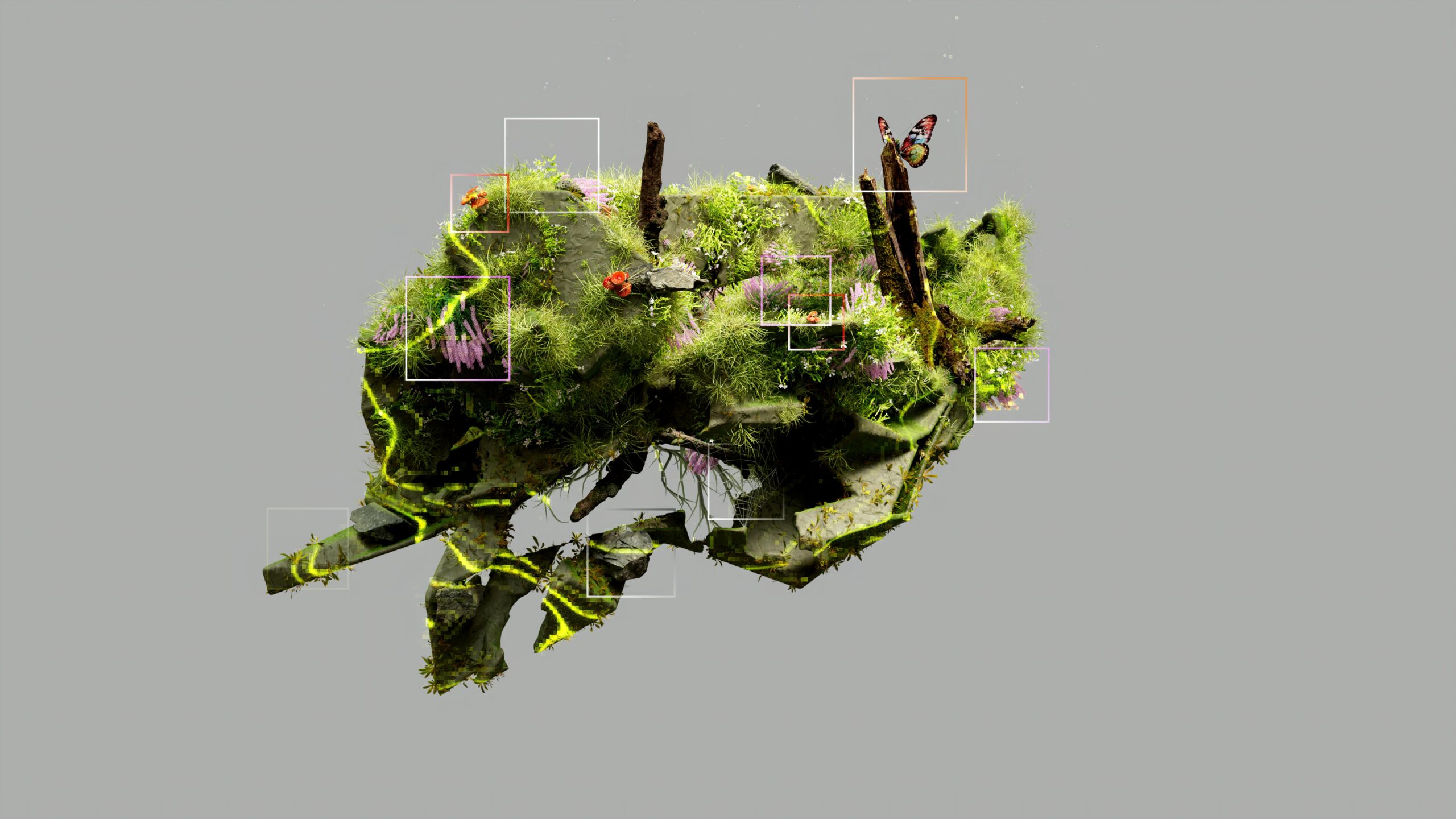
The human brain possesses remarkable plasticity, capable of rewiring itself to process information through unexpected pathways, challenging our understanding of perception itself.

For centuries, neuroscientists and philosophers have debated the nature of human perception, questioning whether our sensory experiences are fixed by biology or malleable through experience. Recent breakthroughs in sensory substitution research have provided compelling evidence that the brain’s perceptual capabilities extend far beyond traditional sensory channels. This revolutionary field demonstrates that our minds can learn to “see” through sound, “hear” through touch, and experience the world in ways that fundamentally challenge our assumptions about human consciousness and sensory processing.
Sensory substitution represents one of the most fascinating frontiers in neuroscience, offering hope to individuals with sensory impairments while simultaneously revealing profound truths about human cognition. These discoveries suggest that perception is not merely about receiving information through predetermined channels, but rather about the brain’s extraordinary ability to extract meaningful patterns from any consistent sensory input.
🧠 The Science Behind Sensory Substitution
Sensory substitution devices (SSDs) work by converting information typically received through one sensory modality into signals that can be processed by another. The concept builds upon the principle of neural plasticity—the brain’s ability to reorganize itself by forming new neural connections throughout life. When deprived of input from one sense, the brain regions typically associated with that sense don’t remain dormant; instead, they become available for processing information from other sources.
The theoretical foundation for sensory substitution emerged from groundbreaking work by neuroscientist Paul Bach-y-Rita in the 1960s. His research demonstrated that blind individuals could learn to “see” using a device that converted visual images into tactile stimulation on the skin. This revolutionary discovery challenged the prevailing notion that specific brain regions were hardwired for particular sensory functions.
Modern neuroimaging studies have confirmed that when individuals successfully use sensory substitution devices, their visual cortex—the brain region typically responsible for processing sight—becomes active even though the information arrives through touch or sound. This cross-modal plasticity reveals that what we call the “visual cortex” might be better understood as a spatial processing center capable of interpreting structured information regardless of its sensory origin.
The Mechanics of Cross-Modal Processing
The brain processes all sensory information through electrical signals transmitted by neurons. Whether you see a sunset, hear a symphony, or feel velvet fabric, your brain ultimately receives patterns of neural activity. This common currency of neural signaling provides the biological foundation for sensory substitution. The brain doesn’t inherently “know” whether a particular pattern originated from the eyes, ears, or skin—it simply learns to extract meaning from consistent patterns of stimulation.
Research has identified several key factors that determine successful sensory substitution:
- Spatial consistency: The substitute sensory signal must maintain stable spatial relationships with the original information
- Temporal synchronicity: Timing patterns must correspond meaningfully to real-world events
- Active exploration: Users typically need to interact with their environment rather than passively receive information
- Extended training: Neural reorganization requires sustained practice over weeks or months
- Multisensory integration: Combining multiple sensory channels enhances learning and functionality
Revolutionary Applications Changing Lives 🌟
Sensory substitution technology has evolved from laboratory curiosities into practical devices that enhance quality of life for individuals with sensory impairments. These applications demonstrate the remarkable adaptability of human perception and offer glimpses into the future of human-machine interfaces.
Vision Through Sound and Touch
The vOICe system represents one of the most sophisticated vision-to-sound conversion devices available. It translates visual scenes into soundscapes where brightness corresponds to volume, vertical position relates to pitch, and horizontal position maps to time. Users wearing a small camera connected to headphones can learn to navigate environments, recognize objects, and even read text by interpreting these audio patterns.
Studies following longtime vOICe users have documented activation in visual cortex regions when processing these soundscapes, suggesting they experience genuine visual qualia—subjective conscious experiences—through auditory input. Some users report “seeing” colors, experiencing depth perception, and developing intuitive spatial awareness that transcends conscious interpretation of sounds.
Tactile vision substitution systems have also demonstrated impressive capabilities. The BrainPort device places a tongue array in the mouth, delivering gentle electrical stimulation patterns that correspond to camera input. The tongue’s high receptor density and direct neural pathway to the brain make it an ideal location for tactile stimulation. Users can achieve remarkable spatial resolution, identifying letters, navigating obstacle courses, and recognizing faces.
Hearing Through Touch
For individuals with hearing impairments, tactile hearing devices convert sound frequencies into vibration patterns on the skin. The Neosensory Wristband exemplifies this approach, translating environmental sounds into vibrotactile patterns on the wrist. Users report developing intuitive understanding of speech patterns, music, and environmental sounds through these vibrations.
Research indicates that with training, the auditory cortex of deaf individuals using these devices shows increased activation, suggesting genuine auditory processing occurs despite the tactile input channel. This neural reorganization supports the notion that sensory brain regions are defined more by the type of information they process than by the physical sensory channel that delivers it.
The Neuroscience of Perceptual Learning 🔬
Understanding how the brain adapts to sensory substitution requires examining the mechanisms of perceptual learning—the process by which sensory systems become increasingly efficient at extracting relevant information through experience. This learning occurs at multiple levels of neural organization, from individual synapses to large-scale network reorganization.
Stages of Adaptation
Individuals learning to use sensory substitution devices typically progress through distinct stages of perceptual development:
Detection Phase: Initially, users consciously attend to individual sensory elements, deliberately interpreting each signal component. This stage involves significant cognitive effort and slow, analytical processing. The experience feels artificial and requires conscious translation.
Discrimination Phase: With practice, users begin recognizing patterns and distinguishing between different stimuli more rapidly. They develop mental shortcuts and categorical perception, grouping similar patterns. Processing becomes faster but still requires conscious attention.
Integration Phase: As neural adaptation progresses, the substitute sensory information begins integrating with other sensory modalities. Users report increasingly intuitive understanding, with less conscious effort required. The substitute sense starts feeling more natural and automatic.
Qualia Emergence Phase: Some long-term users report qualitative shifts in experience, describing genuine perceptual phenomena rather than interpreted signals. They speak of “seeing” or “hearing” rather than translating sensory codes. Neuroimaging confirms activation patterns resembling natural sensory processing.
Neural Plasticity Mechanisms
Several biological processes enable this remarkable adaptation:
| Mechanism | Function | Time Scale |
|---|---|---|
| Synaptic Strengthening | Repeated activation increases connection efficiency between neurons | Minutes to hours |
| Dendritic Branching | Neurons grow new connections to processing networks | Days to weeks |
| Myelination Changes | Neural pathways develop insulation for faster signal transmission | Weeks to months |
| Cortical Remapping | Brain regions reorganize functional specialization | Months to years |
Expanding Human Perception Beyond Natural Limits 🚀
While sensory substitution initially focused on compensating for impairments, researchers now explore using these principles to enhance normal perception or add entirely new sensory capabilities. This augmentation approach suggests humans might expand their perceptual universe beyond the narrow sliver of reality our biology naturally detects.
Sensing the Invisible
Humans naturally perceive only a tiny fraction of available environmental information. We see a narrow band of electromagnetic spectrum, hear limited frequency ranges, and remain oblivious to magnetic fields, infrared radiation, and ultraviolet light. Sensory augmentation devices aim to extend human awareness into these imperceptible domains.
Experimental magnetic sense devices provide continuous feedback about magnetic north through vibration or sound patterns. Users wearing these devices for extended periods report developing intuitive directional awareness, with some describing a genuine “sense” of magnetic fields rather than interpreted signals. This suggests the brain can integrate entirely novel information streams into its perceptual framework.
Infrared sensing devices convert heat patterns into visual or tactile information, enabling users to perceive thermal gradients invisible to natural vision. Applications range from enhanced night navigation to detecting mechanical problems through temperature anomalies. Users develop perceptual skills that extend human capabilities into realms previously requiring technological mediation.
Data as Sensory Experience
Perhaps the most futuristic application of sensory substitution principles involves converting abstract data streams into perceptual experiences. Financial traders use sonification systems that convert market data into audio patterns, enabling them to “hear” market trends and anomalies. Preliminary evidence suggests this perceptual access to data enables faster, more intuitive decision-making compared to traditional visual analysis.
Scientists studying complex datasets increasingly employ sensory encoding strategies to leverage the brain’s pattern recognition capabilities. Weather patterns, molecular structures, and astronomical phenomena become “visible” or “audible” through appropriate encoding, potentially revealing patterns that escape traditional analysis.
Philosophical Implications for Consciousness and Reality 💭
Sensory substitution phenomena raise profound questions about the nature of consciousness, perception, and reality itself. If blind individuals can genuinely “see” through sound or touch, what does this reveal about the relationship between physical stimuli and subjective experience?
The Extended Mind Hypothesis
These phenomena support theories of embodied and extended cognition, which propose that mental processes extend beyond the skull to include bodily states and external tools. When a blind person navigates using a sensory substitution device, the device arguably becomes part of their perceptual system—not merely a tool but an integrated component of their cognitive architecture.
This perspective challenges traditional boundaries between self and world, suggesting that consciousness emerges from dynamic interactions between brain, body, and environment rather than residing exclusively in neural tissue. The seamless integration of technological devices into perceptual experience demonstrates the porous boundaries of cognitive systems.
Perception as Construction
Sensory substitution research reinforces constructivist theories of perception, which hold that experience emerges from active interpretation rather than passive reception of environmental information. The brain doesn’t simply record sensory input like a camera; it actively constructs perceptual experiences based on predictions, expectations, and learned patterns.
This understanding has implications beyond neuroscience, informing philosophical debates about the nature of reality and knowledge. If perception results from constructive interpretation rather than direct access to objective reality, all sensory experience represents a kind of controlled hallucination—the brain’s best guess about the causes of incoming signals.
Future Horizons: Where Sensory Technology Leads Next ✨
Current sensory substitution devices represent early stages of technology that may fundamentally transform human experience. Several emerging research directions promise to expand capabilities dramatically in coming decades.
Direct Neural Interfaces
While current devices work through natural sensory channels, next-generation systems may interface directly with neural tissue. Brain-computer interfaces could bypass peripheral senses entirely, delivering information directly to cortical processing regions. Such technology might enable dramatically higher information bandwidth and more intuitive integration.
Ethical considerations surrounding neural implants remain complex, involving questions of identity, autonomy, and cognitive enhancement. However, therapeutic applications for sensory impairments provide compelling justification for continued development with appropriate safeguards.
Artificial Intelligence Integration
Combining sensory substitution with artificial intelligence could create adaptive systems that optimize information presentation for individual users. AI algorithms might learn user-specific perceptual patterns, gradually refining signal encoding to maximize comprehension and minimize cognitive load. Such personalized sensory augmentation could accelerate learning curves and expand capabilities.
Multisensory Fusion
Future devices will likely combine multiple sensory channels simultaneously, leveraging the brain’s natural multisensory integration capabilities. Rather than replacing one sense with another, these systems might create rich, multidimensional perceptual experiences that exceed natural sensation in information density and clarity.
Practical Steps Toward Perceptual Expansion 🎯
While advanced sensory substitution technology continues developing, interested individuals can explore perceptual training and augmentation through several accessible approaches:
Mindfulness practices: Meditation and focused attention exercises enhance perceptual sensitivity, helping practitioners notice subtle sensory details typically filtered from conscious awareness. This heightened awareness represents a form of perceptual expansion using only innate capabilities.
Cross-modal attention training: Deliberately focusing on connections between senses—how music creates visual imagery, or how visual art suggests sounds—exercises neural pathways involved in multisensory integration, potentially enhancing perceptual flexibility.
Sensory deprivation experiences: Temporarily restricting one sense heightens others, demonstrating neural plasticity and revealing dependencies between sensory systems. Blindfolded navigation exercises or silent retreats illustrate how perception adapts to available information.
Technology experimentation: Accessible sensory apps and devices enable personal exploration of augmented perception, providing intuitive understanding of how brains extract meaning from novel sensory patterns.

The Limitless Mind: Reconceiving Human Potential 🌈
Sensory substitution research fundamentally challenges limited conceptions of human capability. The brain’s ability to extract meaningful perception from virtually any consistent information source suggests that human potential extends far beyond current expression. We are not prisoners of our biological senses but active constructors of experience, capable of expanding awareness into previously unimaginable domains.
This understanding has profound implications for education, rehabilitation, human-computer interaction, and our collective vision of human nature. As technology enables increasingly sophisticated information delivery, the bottleneck of human capability shifts from sensory hardware to the learning capacity of neural software—a much more malleable constraint.
The future may include humans who perceive magnetic fields as naturally as we now see colors, who sense data streams as intuitively as physical objects, and who experience reality through expanded perceptual dimensions. Sensory substitution represents not merely compensation for impairment but a glimpse of humanity’s untapped perceptual potential—a preview of consciousness unbound by ancestral biological constraints.
By understanding and harnessing the brain’s remarkable plasticity, we unlock not just new technologies but new ways of being human, expanding the very boundaries of conscious experience and revealing that perception itself is far more flexible, powerful, and limitless than we ever imagined.