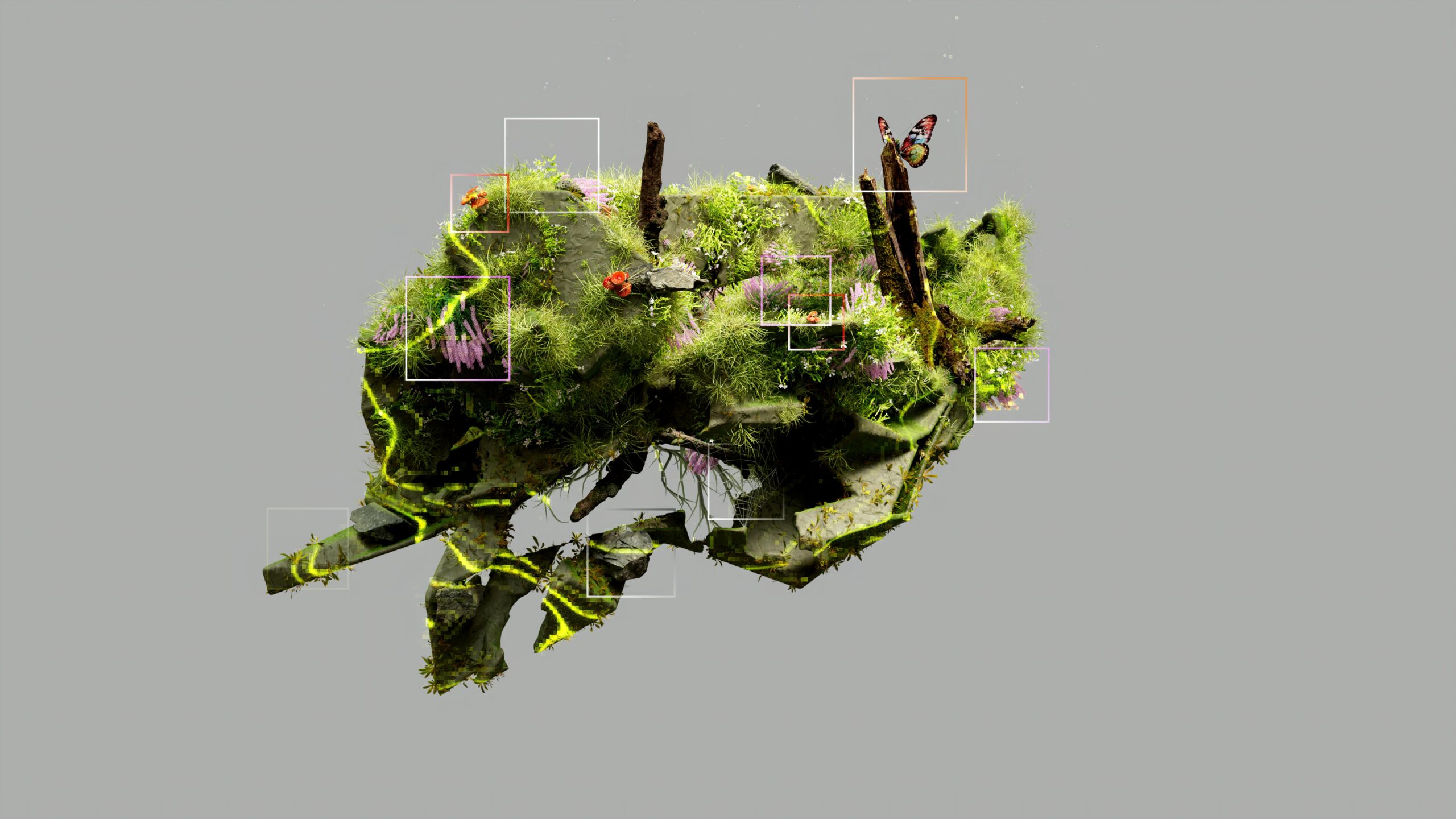
Perceptual distortion forecasting is revolutionizing how we interpret visual information, merging cognitive science with predictive analytics to understand how our minds deceive us. 🧠

Understanding the Foundations of Perceptual Distortion
Our perception of reality isn’t as straightforward as we might think. Every moment, our brains process millions of sensory inputs, filtering, interpreting, and sometimes distorting what we perceive. Perceptual distortion forecasting emerges as a sophisticated field that anticipates these cognitive quirks before they impact decision-making, design, or communication.
The human visual system operates through a complex interplay of biological mechanisms and learned patterns. When we look at an object, we’re not simply recording an image like a camera would. Instead, our brains actively construct meaning from incomplete information, filling gaps with assumptions based on past experiences and contextual clues.
This constructive nature of perception creates predictable patterns of distortion. These aren’t random errors but systematic biases that researchers can study, quantify, and forecast. Understanding these patterns allows professionals across multiple disciplines to anticipate how audiences will interpret visual information, spatial relationships, and environmental cues.
The Science Behind Visual Misinterpretation 🔬
Neurological research has revealed fascinating insights into why our perceptions diverge from objective reality. The visual cortex doesn’t process information passively; it actively predicts what should be present based on contextual information. When prediction and reality clash, distortions occur.
Several key factors influence how we experience perceptual distortions:
- Contextual framing and surrounding visual elements
- Lighting conditions and color temperature variations
- Cultural background and learned visual literacy
- Attention focus and cognitive load at the moment of observation
- Emotional state and psychological priming effects
- Physical factors like fatigue, stress, or environmental conditions
The predictability of these factors makes forecasting possible. By analyzing the conditions under which visual information will be presented, experts can anticipate likely distortions and adjust accordingly.
Practical Applications Across Industries
Perceptual distortion forecasting isn’t merely theoretical—it has transformative applications across numerous professional domains. Architects use these principles to design spaces that feel larger or more intimate than their actual dimensions. Graphic designers leverage distortion forecasting to ensure logos maintain visual balance across different media and sizes.
In the automotive industry, dashboard designers apply perceptual forecasting to ensure drivers accurately judge speed, distance, and spatial relationships under varying lighting and stress conditions. Medical imaging specialists use similar principles to train radiologists to recognize when visual processing shortcuts might lead to diagnostic errors.
Marketing professionals have perhaps most enthusiastically embraced perceptual distortion forecasting. Understanding how consumers perceive package sizes, color relationships, and spatial arrangements on shelves enables more effective product positioning and visual branding strategies.
The Digital Realm and Screen-Based Distortions 📱
Digital interfaces present unique perceptual challenges. Screen resolution, viewing distance, ambient lighting, and device orientation all influence how users interpret interface elements. UX designers increasingly employ distortion forecasting to create interfaces that remain intuitive across diverse viewing conditions.
Mobile applications, in particular, benefit from this approach. Users interact with phones in countless environments—bright sunlight, dim restaurants, while walking, or lying down. Each context creates different perceptual conditions that can affect how interface elements are interpreted.
Color perception shifts dramatically across lighting conditions. A blue that appears crisp and clear in office lighting might become indistinguishable from surrounding grays in outdoor shadows. Forecasting these shifts allows designers to choose color palettes that maintain legibility and aesthetic appeal across contexts.
Methodologies for Effective Forecasting
Developing accurate perceptual distortion forecasts requires systematic methodology combining empirical research with theoretical understanding. The process typically begins with identifying the specific perceptual domain—spatial relationships, color perception, motion interpretation, or pattern recognition.
Researchers then establish baseline measurements under controlled conditions. These benchmarks provide reference points against which distorted perceptions can be compared. Advanced eye-tracking technology, response time measurements, and subjective reporting all contribute data to the forecasting models.
Statistical modeling plays a crucial role. By analyzing how various factors influence perception across diverse populations, researchers build predictive algorithms that estimate likely distortions under specific conditions. Machine learning techniques increasingly augment traditional statistical approaches, identifying subtle patterns human analysts might overlook.
Building Your Forecasting Framework 🏗️
Organizations interested in implementing perceptual distortion forecasting should follow a structured approach. Start by identifying the specific perceptual challenges most relevant to your field. A retail designer faces different issues than a software developer or urban planner.
Establish baseline testing protocols appropriate to your domain. This might involve user testing sessions, expert evaluations, or quantitative measurements using specialized equipment. Consistency in methodology enables meaningful comparison across different design iterations or contextual conditions.
Document findings systematically, creating a knowledge base that grows more valuable over time. Patterns emerge from accumulated data that wouldn’t be apparent from isolated observations. This institutional knowledge becomes a competitive advantage, enabling faster, more accurate forecasting.
Common Distortion Patterns to Anticipate
Certain perceptual distortions occur so reliably that they’ve been extensively documented and named. The Müller-Lyer illusion demonstrates how contextual elements make identical lines appear different lengths. The Ebbinghaus illusion shows how surrounding objects influence perceived size.
These classic illusions aren’t just psychological curiosities—they reveal fundamental principles about how visual processing works. Understanding these patterns enables forecasting in real-world applications. For instance, narrow hallways with converging lines will feel longer than wider hallways of identical length due to perspective cues.
Color constancy phenomena cause objects to appear consistent colors despite changing illumination. However, this constancy has limits. Under certain lighting conditions, colors shift unexpectedly. Forecasting these shifts prevents costly design mistakes where colors that looked perfect in development appear wrong in actual use contexts.
Spatial Perception and Environmental Design 🏛️
Architecture and interior design rely heavily on perceptual distortion forecasting. Ceiling height influences perceived room volume disproportionately—raising a ceiling eight inches can make a room feel dramatically larger than adding square footage to the floor plan.
Window placement affects not just natural lighting but perceived spaciousness. Views to outdoor spaces create psychological expansion beyond physical boundaries. Strategic window positioning can make small spaces feel more open while poorly placed windows might fragment visual continuity.
Texture and pattern selection significantly impact spatial perception. Vertical stripes draw the eye upward, creating perceived height. Horizontal elements emphasize width. Complex patterns in small spaces can feel cluttered while the same patterns work beautifully in larger areas.
Cognitive Biases and Expectation Management
Perceptual distortions don’t occur in isolation from cognitive processes. Our expectations powerfully influence what we perceive. Confirmation bias leads us to see what we expect rather than what’s actually present. Forecasting must account for these psychological factors alongside purely visual phenomena.
Priming effects demonstrate how prior exposure influences subsequent perception. Someone who’s just seen images of food will interpret ambiguous shapes differently than someone primed with tool images. Marketing applications are obvious, but implications extend to education, safety signage, and information design.
Cultural factors create learned perceptual patterns that vary across populations. Color symbolism differs dramatically between cultures. Spatial reasoning and perspective interpretation show cultural variations. Effective forecasting must consider the specific audience’s cultural context and learned visual literacy.
Technology Tools for Modern Forecasting 💻
Contemporary perceptual distortion forecasting leverages sophisticated technology. Virtual reality systems enable testing designs in simulated environments before physical construction. Users can experience architectural spaces, evaluate product packaging, or interact with interfaces while researchers measure perceptual responses.
Eye-tracking technology reveals exactly where attention focuses and how quickly different elements attract notice. Heat maps generated from eye-tracking data show which design elements succeed in drawing attention and which go unnoticed despite designer intentions.
Computational modeling simulates perceptual processing, predicting how specific stimuli will be interpreted. These models, trained on extensive empirical data, can evaluate thousands of design variations quickly, identifying options most likely to achieve intended perceptual effects.
Integrating Artificial Intelligence Approaches 🤖
Machine learning algorithms excel at identifying complex patterns in perceptual data. Neural networks trained on how people perceive various visual stimuli can predict likely interpretations of new designs with impressive accuracy. This capability accelerates the forecasting process dramatically.
AI-powered tools analyze images to predict potential misinterpretations, flagging designs likely to create confusion or unintended impressions. These systems consider multiple factors simultaneously—color relationships, spatial arrangements, contextual elements, and learned cultural associations.
Generative AI systems now create design variations optimized for specific perceptual outcomes. Designers specify intended perceptual effects, and AI generates options predicted to achieve those goals. Human designers then refine these AI-generated starting points, combining computational power with creative intuition.
Training Your Perceptual Awareness 👁️
Developing expertise in perceptual distortion forecasting requires cultivating observational skills. Begin by studying classic visual illusions, understanding not just what happens but why these distortions occur. This theoretical foundation supports practical application.
Practice active observation in daily life. Notice how lighting changes affect color perception throughout the day. Observe how architectural features influence your sense of space. Pay attention to which design elements capture your attention and which fade into the background.
Conduct informal experiments. Compare how designs appear on different devices, under various lighting, from different distances. Document these observations, building personal experience that complements theoretical knowledge. Over time, you’ll develop intuitive forecasting abilities.
Future Directions and Emerging Possibilities
Perceptual distortion forecasting continues evolving rapidly as technology advances and our understanding of cognition deepens. Augmented reality presents fascinating new challenges and opportunities. How do virtual objects integrated into real environments affect perception? What distortions emerge from this blending of digital and physical?
Neuroscience research using brain imaging techniques reveals increasingly detailed information about perceptual processing. As we understand neural mechanisms more completely, forecasting models become more accurate and nuanced. Eventually, we may predict individual perceptual variations, not just population averages.
Personalization technology could deliver customized visual presentations optimized for each user’s perceptual characteristics. Interfaces might automatically adjust based on viewing conditions, user fatigue levels, or individual visual processing tendencies. The boundary between forecasting and real-time adaptation will blur.
Ethical Considerations and Responsible Application ⚖️
With powerful forecasting capabilities comes responsibility. Understanding how to manipulate perception raises ethical questions. When does strategic design become deceptive manipulation? How do we balance effectiveness with transparency?
Marketing applications particularly demand ethical scrutiny. Techniques that make products appear larger, fresher, or more appealing must balance persuasion with honesty. Industry standards and regulatory frameworks increasingly address these concerns, but practitioners must cultivate personal ethical awareness.
Accessibility considerations are paramount. Perceptual distortion forecasting should enhance experiences for all users, including those with visual impairments or atypical perceptual processing. Inclusive design principles ensure forecasting benefits diverse populations rather than optimizing only for typical perception.

Mastering the Art of Clear Vision 🎯
Perceptual distortion forecasting represents a fascinating intersection of science, art, and practical application. By understanding how our minds construct reality from sensory input, we gain powerful tools for communication, design, and problem-solving. The field continues expanding as research reveals new insights and technology enables more sophisticated analysis.
Success requires balancing theoretical knowledge with practical experience. Study the research, understand the principles, but also cultivate observational skills through active practice. The most effective practitioners combine analytical rigor with creative intuition, using forecasting as a tool that enhances rather than replaces human judgment.
Whether you’re designing products, creating digital interfaces, planning environments, or communicating visually, perceptual distortion forecasting offers valuable perspectives. By anticipating how audiences will interpret visual information, you can create more effective, intuitive, and engaging experiences.
The journey toward seeing clearly involves recognizing that perception is an active, constructive process rather than passive recording. Embrace this complexity, study the patterns, and apply insights thoughtfully. The art of perceptual distortion forecasting reveals not just how we see, but how we might see better—transforming understanding into actionable wisdom that enhances human experience across countless domains. 🌟